
The founders
Former trader at Lehman Brothers and Credit Suisse.
Engineer with a background in banking technology.
The story
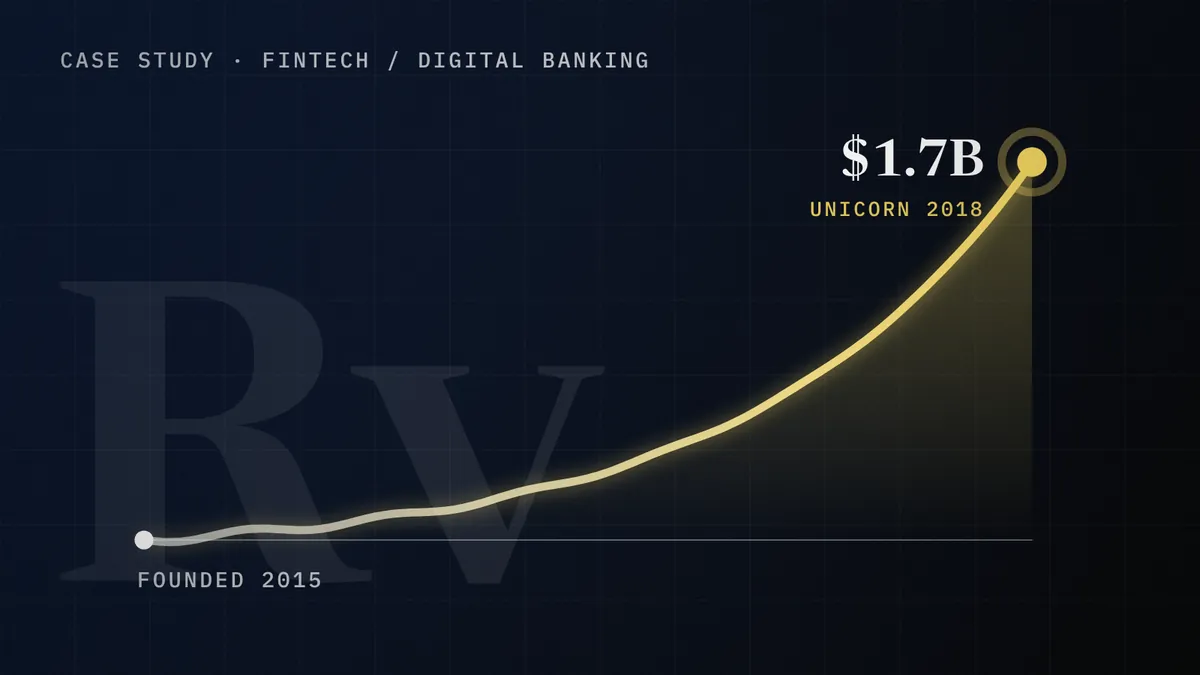
Nik Storonsky travelled often and hated the hidden fees banks charged on foreign currency. In 2015 he and Vlad Yatsenko launched Revolut in London: a prepaid card and app that let people spend abroad at fair exchange rates.
Once users had the app, Revolut kept adding features — budgeting, stock trading, crypto, business accounts — turning a single use case into a financial “super app”.
In April 2018, a $250 million Series C led by DST Global valued it at $1.7 billion, roughly three years after launch.
Timeline
- 2015Launches multi-currency card and app in London.
- 2017Expands across Europe; adds more financial products.
- Apr 2018$250M Series C led by DST Global at $1.7B — unicorn.
How the money came in
| When | Round | Amount | Led by | Valuation |
|---|---|---|---|---|
| Apr 2018 | Series C | $250M | DST Global | $1.7B |
The methods that worked
Wedge product
One painful problem — FX fees — brought users in; many products kept them.
Ship relentlessly
A fast product cadence made Revolut feel more modern than banks.
The hard parts
- Regulatory scrutiny and banking-licence processes in multiple countries.
Lessons for Indian founders
- A narrow “wedge” is the fastest way into a big, regulated market.
Conclusion
Revolut’s wedge-then-expand playbook is directly relevant to Indian fintech founders.
The Founder Playbook includes Build Your Unicorn, a simulation of hiring, capital and fundraising.
Sources
Educational summary based on public reporting. Revolut is a trademark of its owner; The Revenue is not affiliated with the company. Figures are as reported at the time and may since have changed. Spotted an error? Tell us.